Pages

Sunday, July 11, 2021

Writers’ Day in the City


Writers need time and stimulation to create. A couple of years ago, our writers group decided to host our own writers retreat. A weekend to go somewhere away from family obligations and routines and write - together and alone, learn from each other, take ourselves seriously. After two years of going to Carolyn’s former step-mother’s beautiful house in the country, we decided to have a day in the city instead. The city being Austin, Texas. We chose four stops and each of us took on the task of creating a writing invitation. 

First stop: Thunderbird Coffee - Esmer had four idea-generating prompts. We took one, wrote our list for one minute and then passed it to the next person. Then we picked one thing from any of the four lists, or something totally different, and wrote for five minutes. The four prompts were:

  • Words that remind you of inner power 
  • Poem titles
  • Memories you would like to download
  • Places you have never been


12:01 A.M

Nothing good happens

After midnight

My grandmother always said

The police came knocking on her door

After midnight

With news of a car crash

Driver had been drinking

After midnight

Probably started before

Passenger wasn’t wearing a seatbelt

After midnight

Didn’t have a chance

The driver was

But this time, it wasn’t enough

The tree was too mighty and big

After midnight

The agony of a mother’s loss

The cry of a mother’s pain

Was overpowering and all encompassing

Like the night

After midnight

-Esmeralda


Our next stop was the independent bookstore Black Pearl Books. We did not realize that it is housed in the same location as the wonderful organization Ten Thousand Villages, a shop where artisans from around the world can sell their products at fair prices. Of course, we had to look around! 

Andrea’s invitation for us was to write down the titles of ten books, from any genre. Later we used the words in the titles to generate some writing.


There's a Revolution Outside, My Love.     

There's a Revolution Outside, My Love

We Do This 'Till We Free Us

till A Chorus Rises

till we tase The Sweetness of Water

till we see The Evidence of Things Not Seen

in The Anthropocene Reviewed

differences between us - 

Almost Zero

we Come in All Colors

Life's too Short, Gilded Ones

                -Susan


After lunch we headed to the Blanton Museum. Although Susan had some way for us to be inspired by the artwork in all of Blanton’s galleries, we only had time to visit Black Is Beautiful: The Photography of Kwame Brathwaite. We chose one of the pieces to imagine a conversation, either with us or between the subjects in the photos. 

You see me, you see you.

How you see me is how you’ll see you.

My eyes are your eyes.

My hair is your hair.

You see it?

This nose, yours.  

These lips, ours.

I am you and you are me. 

Remember that when you look into 

the eyes, the mind, the heart, the soul, the story 

of somebody who looks like me, looks like you.

If you can see me, you can see you.

And if you can see us, then it won’t matter if they can see us.

See us just as we are

Black. Is. Beautiful

-Andrea
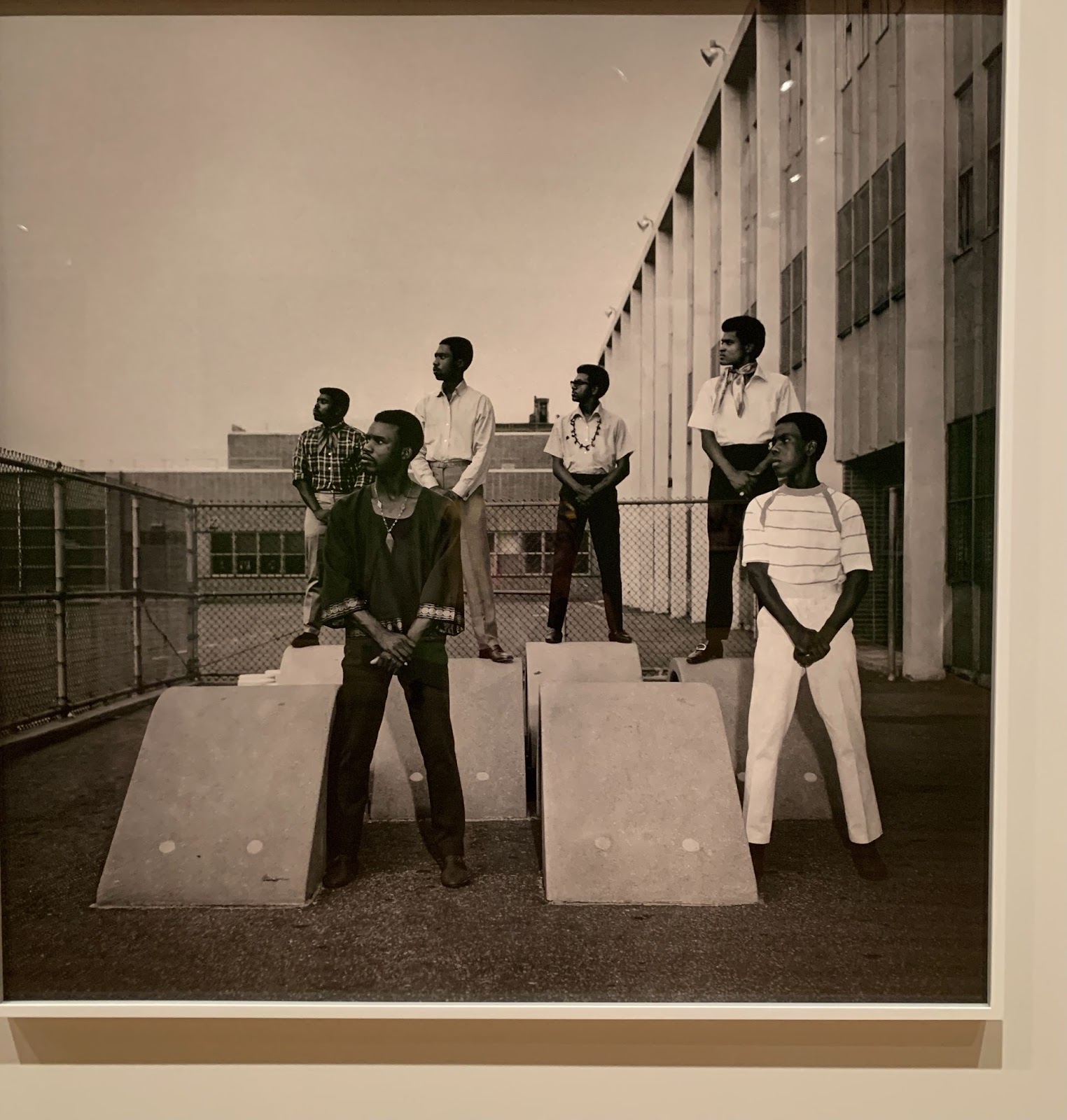


 .   

Public school, Harlem, 1966

Males: We are looking to our future, away from our past. We are strong, we are confident in our worth as people, whether others are or not. We are determined not to depend on others to set our own worth or value. We are standing on the foundation those before us have worked so hard to lay down.

Females: We try to look confident and strong, but we are not completely sure who we are in this day and age. We want to stand proud and BE somebody, but we are also products of a society that judges our worth as females in a certain way - a way that doesn’t encourage personal strength or intellectual achievement. Even more, a society that holds black women to another place entirely. How do we navigate the conflicting demands of this modern age: being proud, free, confident, self-reliant, while also avoiding the clutches of the past with its diametrically opposite expectations?

                                                                                                                -Carolyn
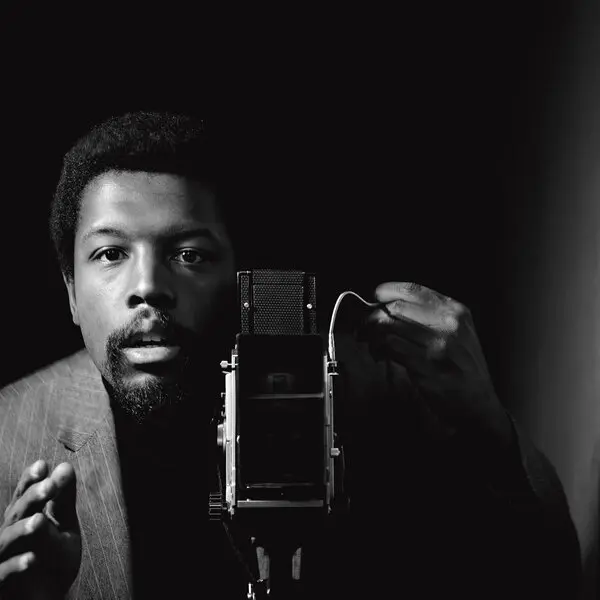


Listen!

You ask me

Why am I behind a camera.

Not in front of a march,

Or at a counter,

Or on a bus.

My weapon is my art.

My weapon is my eye.

Through my eye

You will see beauty, 

you will love that beauty

    You will love the skin that wears it

And the heart that beats underneath it

You will love the beauty that is 

Black.

                            -Susan 


We ran out of time and didn’t get to see what Carolyn had planned for us at the Austin Public Library. But no worries! That’s the subject of next month’s post. 

Writing needs time and stimulation to grow. Anything can serve as stimulation - the plants in your house, your children, the sounds outside the window, even the dirty dishes. But time, we must steal time if we have to, even if it's just a few minutes, to make something of our words. 

Monday, June 21, 2021

On Trust, Hope and Writing to Understand


Our writers group is 11 years old! Not a month has gone by without us meeting together to talk about writing, reading and life. To be honest, sometimes we only talk about life. But writing is still our way of making sense of our worlds as women, mothers, teachers - humans. Often we use a word, a quote or a prompt to keep ourselves accountable and actually write during a writers group. Yesterday, we each randomly chose a page from Andrea’s
Find Your Calm notebook. Each quote seemed to resonate especially with the person who picked it. Once we finished writing, we also noticed the common thread of hope, trust and resilience that ran through all of our thoughts. We highly encourage the habit of daily reflection, especially through writing. You can start by writing 10, 5 or only 3 minutes. Pick one of these (or all of them) as your inspiration to start your writing journey.


“Do not anticipate trouble or worry about what may never happen. Keep in the sunlight.” - Benjamin Franklin


I come from a long line of worriers and anticipators of trouble. We are experts at writing worst-case scenarios. All those memes about what your mother is thinking when you don’t answer her texts? They were inspired by me and my relatives or mothers in general. Cell phones have allowed us to be in touch ALL THE TIME. Find My Friends lets me know where my kids are even if they are in some remote village in the mountains of Colombia. But with that the opportunities to worry and anticipate the trouble have taken on a whole new level. When someone doesn’t answer a text right away or their phone goes to voicemail, we don’t think: Maybe they left their phone at home or in the car, maybe it’s on silent; maybe it ran out of battery, maybe she’s in the bathroom and can’t answer. No, the first images that come to mind are of kidnapping, robbery or injury. I am happy to report, however, that the speed with which we recover from these doomsday thoughts and latch on to more rational and plausible explanations has gone down with each generation. As I have moved along in my fifties, I have gotten better at stopping these thoughts from consuming or overwhelming me. I have found that repeating to myself  “God is good, God is great” reminds me of all the evidence in my life that backs these statements. As I age, I realize that this kind of thinking is not coherent for someone who fully trusts in God, His wisdom and His protection. As faith and trust grows, fear diminishes. It’s a journey and a process. 

                                                                                                -Susan


Breath is the power behind all things . . . I breathe in and know that good things will happen.”  - Tao Porchon-Lynch


Breathing in . . . breathing out . . . If I pull good in from my surroundings and let it nourish and enrich my body, my soul, my whole being, I can then breathe goodness out, sending it on to those around me.


When I inhale, the force of life fills my lungs and eventually all the cells in my body, empowering them. My heart beats, sending oxygen-filled blood to all of me. Because of this God-devised, life-sustaining miracle, my legs can move me to action for good. My arms can embrace those who need comfort or empathy, or simply a human touch. My mouth can speak words of truth, love, or encouragement when they are needed. My brain can formulate solutions to problems, large and small, and conjure new possibilities for myself, those I love, and all mankind.


When I exhale, all of the potential that has been nourished within me by the life-giving oxygen I breathed in is sent out into the world to flourish and grow. And the cycle repeats . . . 


Even while I sleep, I breathe in and out, knowing that new opportunities are being prepared for me to inhale on the coming day. I can sleep well, knowing that good things will happen. 


                                                                                                -Carolyn


“Nobody can teach me who I am. You can describe parts of me, but who I am - and what I need - is something I have to find out for myself. - Chinua Achebe


It is pretty amazing the way that what one needs at any given moment will come to you, like a message in a bottle floating on the sea of life and heading straight toward you.  Sometimes the message comes in a conversation with a friend, while listening to a song or in a quote found on a random page in a random book- just like the one above. It seems random, but it is as if the thoughts we have been turning over in our minds as we turn over in our beds- the secret wishes and prayers for insight and direction, not even spoken aloud, have become an echo that returned to us on the page of this or that random book. I know there are systems in the brain that are awakened by whatever we decide to pay attention to. It is the reticular activating system to be exact. It is the one that alerts you to every car on the road that is like the one you just bought or are considering buying.  The one you now see everywhere though you had never seen it before. Yes, our brains get attenuated by the thoughts we think, looking for confirmation all around us, but I think it is also true that we call things to us by our thoughts. The more we think something the more of it we will see in our lives. This makes it crucial that I think thoughts about myself, others and the world around me that I actually want to see come to fruition. There is little use in thinking empty thoughts that only lead to insecurity, doubt and fear about who you are, who others might be and what life really has to offer. This brings suffering of all sorts.  Take those thoughts captive and make them obedient to Christ - believing in the truth of who God says you are. Who we are and how we experience life is largely a product of what and how we think. Our words create our worlds. They beckon forth so much of our realities. So let’s think about who we are and decide who we want to be because what we think about we bring about.


                                                                                                            -Andrea


“May your choices reflect your hopes, not your fears.” Nelson Mandela


As a child, I played mommy. I was good at making sure my newborn plastic baby went down for her naps at appropriate times, and at the same time every day. No one wants to deal with a cranky baby if they can avoid it. Bath, book and prayers were our routine. Wrapped up in her blanket, and she slept through the night no problem. As the oldest sibling I took this caretaker role just as seriously. I planned and hoped to be a good mother some day, and I had to practice. Whether with my plastic dolls or my siblings. I had no fear or anxiety about this particular dream of mine. Even when I became pregnant with my first born, fear of labor or contractions never crossed my mind. (Although I was slightly nervous about morning sickness.) The bedtime routine I had perfected and implemented so easily with my plastic baby girl didn’t quite always go as smoothly. Now that I have two teenage children, a little fear has begun to set in. Fear of the unknown. Fear of not being with them every step of the way to guide their choices, or to “help” make sure they make the “right” ones. I’m afraid of my son going off to college in the very near future, and God forbid he makes a mistake without me being right there to do some clean up. But I know this fear is irrational. I can’t be there at every turn, at least not physically. They know I am no more than a phone call or text away, and that gives me peace. 


                                                                                                    -Esmeralda


Tuesday, March 9, 2021

A Reason, A Season, or A Lifetime (#9)


A few of my beautiful new ladies who love the light.

Everyone knows that plants need water, sunlight, nutrients and space to grow.  What I did not know until I became a plantsman is that in winter, many houseplants need less water, no fertilizer and produce little to no new growth. They go dormant.  They may not look it, but they are very much alive and will thrive in the next season.  This happens naturally as seasons and the weather changes. Plants do this to conserve energy in order to be prepared to respond to and thrive when the culture and conditions change for the better. Plant enthusiasts must know the signs of dormancy or they could kill the plant by overwatering, overfeeding, overcompensating in ways that are more harmful than helpful. Some friendships are like this.  They need little to sustain them throughout winter seasons of life: career challenges and intimate relationship changes, births and deaths, relocations and revisions to daily life, emotional and mental sabbaticals. They may appear dead, but really the relationship may just be dormant. We need to know the signs.  

In every friendship there are times when phone calls taper off, but your friends are still in your thoughts and prayers. There is a text every now and again with a meme or inspirational quote that harkens back to an inside joke. You check social media to find you've been tagged in a sweet memory of another time in your friendship and it causes a longing for more.  One of you sends a gift or a card in the mail, just because. You know what’s going on in your friends’ lives and have placed little expectation on them to do more than they can do at this time.  You cannot wait until life settles down so you can spend time with them again. And before you know it, the spring season of life arrives. Regular texts resume, phone calls are made, coffee dates are set, laughs and life pick up right where you left off. 

So here’s my bit of advice for those who may read a social media post or hear someone say “stop texting your friends first and see what dead plants you’ve been watering”:

Excerpt of the viral Facebook post that got me thinking.

Keep watering your friendships in the ways that you're able to in the seasons you're in. Your friends know you. If they need something more, different or better, they'll be honest with you and ask for it, and they will understand if you cannot give it- especially when you do not have it to give. But if not, remember this: some friendships, like some plants, are seasonal, meaning they complete their full growing cycle in one season. Some people are in your life for a reason (we work together and are good friends in that context), a season (our kids are playing on the same sports team or we share a hobby or community activity), or for a lifetime. 

Lifetime friends are perennial, lasting or existing for a long or apparently infinite time; enduring or continually recurring. They know who you are and love you because of and in spite of that.  Lifetime friends are the ones who are there in every season. They know what the friendship needs, they recognize what you provide, and they, too, contribute to the care of the relationship. They water, fertilize and prune. They trust you will do the same.  They watch and wait with you in anticipation for the next season of blooms and new growth. Check in on all of your friends.  Do what you can for each kind and in every season.  Give each the care, space, and light it needs. What you water will grow in its time, in its way. 


💚 Andrea


Sunday, February 7, 2021

(#8) Is This My Story to Tell? by Andrea


    Living in community means our lives will be commingled, and our stories will intersect with others. We have all heard someone from a small town lament something to the effect of 'everybody knows everybody's business here.' Some of this is inevitable when you're doing life together.  Yet, I have found that in families, churches, schools, and organizations,  there is sometimes something else at play. 
     Lauryn Hill has a line in one of her songs where she sings: 'Led to believe because we live in neighborhoods telling us what's going on will be all right.' We often feel obliged to tell other members of the community what's going on with someone else. We share someone's good news before they get to. We share someone's challenges with others and before we know, everyone is privy to that person's pain. We do not ask permission to share other people's tales with the rest of the community, as if the whole community has a right to know. I have been guilty of this myself before, especially in sharing someone's good news. I am a pretty good secret keeper and confidante. I think that's why people feel safe sharing intimate details of their lives with me. They come for a listening ear and often for me to speak life into their lives. That is a privilege I do not take lightly. To be trusted is one of the most important aspects of who I want to be, now and forever. 
    Yet I have always felt uncomfortable and uneasy when someone shares something about someone else that does not pertain to me or the sharer at all. I wonder if we all have that little sensor that goes off when we know we shouldn't be saying or hearing someone's tale. My general rule for other people's business is 'if I don't need to know, I don't want to know'. I learned this early in life.  Right around early adolescence my mother and grandmother began saying to me, 'if people will tell other people's business to you, they'll tell yours to other people.' I saw it play out in the years of middle and high school. That's about when it starts. Probably by age 9 or 10, we start telling other people's stories for them. I never wanted to be caught up in the mess of 'I heard you said blah, blah, blah about me!' So not talking about other people kept me out of that foolishness during my school days. People had to make up a lie in order to try to pull me into situations like that. 
     The line between gossip and care is very thin. Sometimes, we do need to share with a trusted source because we genuinely need advice in how to move forward or the story has had an effect on us and we need to work through it. My husband and I have ALWAYS gone to trusted confidants and advisors in major matters with our children. We had to share parts of the children's stories in order to tell ours and to get what we needed. Yet, even with our children, we do not share their stories willy nilly, without regard for their privacy and needs. It is so tempting to share about someone's trial and even their triumphs. I face it, too. But to keep myself far from crossing the line, I ask myself:

if this were my story, would I want someone I entrusted it to tell it to just anyone? Would I want this on the front page of the newspaper? Would I want this shared on social media? If it were my story, would I share it on social media, or with just anyone? How would I feel if I found out that others were discussing something personal, private and intimate in my absence? 
    
     Some people are open books with their lives. They may feel comfortable talking to absolutely any one who will listen. But that's for them to do, not me. Even if someone doesn't specifically ask for us to keep a secret, I believe we know intuitively, deep down inside, when that's the expectation or should be. 
    Gossip hurts everyone- the speaker, the listener and the main character in the narrative. Gossip destroys trust, integrity, and one's self-respect and esteem. I am pretty sure every major religion and philosophical teaching warns against it. There are all kinds of psychological reasons we indulge in it, but there are just as many reasons to abstain.          
    We all need safe places to let our soft spots show. We all need at least one person who we know will keep our confidences and have our backs. Let's all be the kind of people who others can count on to let them tell their own stories, especially those that reveal their challenges and vulnerabilities. We can talk to who we need to in order to process our thoughts, feelings and part in the story, but make sure that's what we're doing, not just spilling the tea as the young folks say.

-Andrea 

Thursday, December 31, 2020

Twelve Blog Posts of Andrea (#7)


My 2020 Reading List
The first book I read in 2020 was more appropriate preparation for the year to come than I could have ever predicted. From the back cover: Life often looks so very different than we hoped or expected. Some events may simply catch us off guard for a moment, but others shatter us completely. We feel disappointed and disillusioned, and we quietly start to wonder about the reality of God’s goodness.
My first book of the 2020 Reading Season

I attempted to read this book in January of 2019, but I soon abandoned it because it didn’t seem what I needed then. I decided to give it a second go because disappointments in life are inevitable and proper preparation can prevent poor perspective-taking. As is true for anyone who has been alive for more than a moment, I had already experienced my fair share, and I knew I would face one or some in 2020. I was intrigued by the author’s assertion “that our disappointments can be the divine appointments our souls need to radically encounter God.” This book did not disappoint in helping its reader to lean into the gap between the life we expect and the life we actually encounter. Lysa TerKeurst lets us into her personal disappointments and shows us how to rethink what often feels like the end as opportunities to begin again, trusting God along the new path that opens beyond the rubble of disappointments. This book is a great reminder of God’s provision when life goes sideways by chance or by our own choices.


"History is who we are and why we are the way we are."
David McCullough
I learned of this book from a talk given by the author on the history of racial violence in Chicago.  While conducting research on another project, Ms. Ewing discovered a report of a study conducted to discover the reasons for the eight days of violence, death and terrorism during the Chicago Race Riot. of 1919. After reading the report, "The Negro in Chicago: A Study on Race Relations and A Race Riot", the author determined to utilize "speculative and Afro-futuristic" poetry to explore the stories of the lives directly impacted by the events of that Red Summer.  In this collection, Ms. Ewing asks how far have we come in the last 100 years, and how can we see our way forward so that 100 years from now we can tell a different story.
I read many exceptional books this year, almost all of which I would recommend. Each of these books served a purpose, served as a teacher of sorts.  In this historic year, I read for distraction, I read as a seeker, I read to meet old and new friends and new ideas.  I am better for this reading season- from the first book to the last.


Twelve Blog Posts of Andrea (#6)

(SIX)

“To grow in love and service, you — I, all of us — must value ignorance as much as knowledge and failure as much as success… Clinging to what you already know and do well is the path to an unlived life. So, cultivate a beginner’s mind, walk straight into your not-knowing, and take the risk of failing and falling again and again, then getting up again and again to learn — that’s the path to a life lived large, in service of love, truth, and justice.” Parker Palmer


I think the sentiments expressed here are easier when there is "conformation bias" so to speak--- embracing a beginner's mindset when the encounter confirms a path you think you are supposed to be on, or have chosen. It's hardest when you're confronted with ideas, paths, possibilities you've never considered, been exposed to, or invited to explore. It's hardest when what you have to be open to may even go against what you've experienced. It's so hard for us to consider something outside of what we believe to be true, even when we know that we don't know.

Ignorance, or a beginner's mind, is hard to allow, also, when it is simply for the greater good. To embrace ignorance for the sake of growing as a human, learning how to be better when you don't think anything is wrong with the way you're going about life is tough. Who chooses to complicate their lives in this way? Yet, we must if we want to fully live, to keep learning, to be better. It's probably why Jesus calls his followers to become like little children. Children are not without pride (granted they do not have nearly the arrogant pride we adults do), yet they know they don't know most of what they need to live and grow. So they ask questions; they listen and stay open to other possibilities when presented with them, and even when they are not. They look for and believe that other possibilities are out there. They embrace a greater level of humility with the people in their lives that they can rely on. They trust. This is why trusting relationships with people who can guide us are so important. People can be messy, and people can be messengers. So when we humble ourselves and invite other teachers in, we can get better at being human. We get better at love and service to one another. Humility is always rewarded.

I do not know what I do not yet know. This is why I read from a variety of authors and surround myself with people who experience life differently than I do. This is why I listen and ask questions. It is also why I share my thoughts with others. Though I do not embrace any and every wind of teaching, I always learn something about myself, other people and how to see the world even when I do not accept or agree with the lessons or the teachers. Humility requires wondering, questioning, seeking, examining and reflecting. This is one reason I pray. I believe that God gives wisdom to those who ask, and wisdom comes through examining the world and one's life in reverence and humility before the Creator of both.

I agree with Parker Palmer. On this sojourn, to fully live, we all must embrace being beginners again and again.

Photo by Brett Jordan on Unsplash


Wednesday, December 30, 2020

Twelve Blog Posts of Andrea (#5)

"In order to leave this portrait of himself as a memorial for his friends and relations, he makes a number of trials - for such is the meaning of the word essai (essay), which he invented as a literary term- in order to test his response to different subjects and situations.  ...he is making a trial of himself and his opinions, in an endeavor to see which of them are permanent and which are temporary; which of them arise from the passing circumstances of his life and the particular climate of his times, with its pedantic scholarship, its religious dissensions, and its cruel civil wars, and which belong to the man himself, Michel de Montaigne."

From J.M. Cohen's Introduction to Essays by Michel de Montaigne 

INTRO

I write these briefs essays oftentimes in response to something I have read or overheard. I write to push against widely and fiercely held ideas. I write essays to try out other ways of looking at notions we sometimes just accept as so. When I begin to shake my head, that is a signal to me to write, to explore alternative points of view.  Most of the time I write short essays, like Monsieur Montaigne, to put my own thoughts and viewpoints on trial. What better way to know one's own mind, and to decide which thoughts are worth keeping and which needs to be dispensed.  What follows are a few micro-essays on a variety of topics I have explored this year.  

(FIVE)


What other people do may have an affect on our thoughts and feelings. Nonetheless, each of us is 100% responsible for our thoughts and our feelings about our interactions with others. This does not mean that we cannot confront another about the actions that prompted the thoughts and feelings of inferiority, but we cannot hold others responsible for our internal stuff. We all filter every single current experience in our lives through our previous experiences. The more we recognize how our past experiences and how we have thought and felt about them influence our present feelings and thoughts, the better able we will be to pull back, recognize the strongholds in our mental and emotional processing systems and overcome them to better maintain control over our responses. When we try to make other people responsible for our feelings, we lose our power to heal ourselves and become confident, healthy beings who can be vulnerable yet strong. We miss opportunities to grow up and become more spiritually, emotionally and mentally mature. We may put a burden on other people that diminishes their ability to be authentic and genuine in our presence because they begin to fear doing things that will offend and hurt us easily. No doubt, those with whom we have close or intimate relationships can and must own their stuff. An example of this would be someone with whom you’ve had a conflict acknowledging that their tone was disrespectful which triggered you to feel disrespected. But if when others accept their part in our hurt, we still expect them to fix or take away our pain, we put an impossible, unnecessary and unhealthy expectation on them. Putting away the pain is our responsibility. And that can only come with a decision not to indulge in self-defeating patterns of picking at the wound, such as, perseverating over the hurtful episode, entertaining one-sided, unsubstantiated stories about the other person, indulging self-deprecating thoughts, or expecting a certain level of emotional response from the offender.  No one can make us feel anything. We feel what we feel because of our perceptions, beliefs and the schema we have developed over time.  People can for sure be jerks. Yet, we have the power to not allow their jerkiness to lead us to feel poorly about ourselves.

Tuesday, December 29, 2020

Twelve Blog Posts of Andrea (#4)


mind-ful-ness


How many of you hear the word mindfulness then check out?  I used to.  The word conjured up images of people with a whole lot more self-control and a longer attention span than I could ever muster.  Just hearing the word made me tired. My shoulders would slump a little because deep down mindfulness seemed like one more thing I could try that would be good for me but impossible to maintain. Imagining failure before you even start can have a what’s-the-point effect on you. Despite the rave reviews, personal testimonies and millennia of evidence touting the benefits of practicing mindfulness, I did not think it was something I could start and sustain. I bet after reading that you’re now thinking about the thoughts you’ve had about mindfulness, what the term calls to mind for you, how it makes you feel.  Guess what!  That’s mindfulness.  


  1. the quality or state of being conscious or aware of something.

  2. a mental state achieved by focusing one's awareness on the present moment, while calmly acknowledging and accepting one's feelings, thoughts, and bodily sensations, used as a therapeutic technique.


That little graphic above helped me to think of mindfulness in its most basic terms. Thinking about it as being present with my body helped me to determine what this quality or state looks like in my day-to-day and has allowed me to craft and adopt practices which work for ME. I spend time each day simply sitting in silence and solitude.  I daydream. I let my mind wander then try to recall what thoughts came floating by.  I breathe, and pay attention to what I am feeling in key parts of my body. I sip coffee and pay attention to the smell and taste. I stretch. I close my eyes and listen to the space I am in.  I do one thing at a time. I actively slow down and tell myself to do so, over and over, until I am fully aware and engaged in whatever it is I am doing- watering my plants, washing dishes, eating, praying. And the benefits of these practices and others are more calm, more control, more clarity. I have been experiencing a stronger mind-body-heart-soul connection.  This translates into greater connection to God, myself and others. Being more mindful means I can better love all three.  I cannot explain the difference, but I can surely feel the difference. 


Mindfulness is simply living your life wide awake, at a pace that allows you to experience it fully, even the most mundane parts.  If your interest has been piqued, spend a few moments thinking of how mindfulness might look in your life, what ways of practicing it would feel natural to you, and where can you start small today.   


Saturday, December 26, 2020

Twelve Blog Posts of Andrea (#2 & #3)

(TWO)

Artists say, “Let me draw something that might help our understanding, help us change or wake up, be inspired to awe or kindness."

Anne Lamott, Almost Everything


Writers Say

Let me write something that might help us walk in each others’ shoes,

be inspired to love and 

to be better for one another

to be less afraid and more curious about 

our one, fine, glorious life.  


Let me write something which might help us wake up, 

help us see what we could not have seen otherwise. 

Let me write something which will add light 

and life 

and laughter.  

Let me write something to unburden our souls.

Let me write something that shows us another way to walk each other home.


-A Writer's Prayer


(THREE)

Passing by a space recently, I saw several signs with sentiments about being kind- choose kindness; if you can be anything, be kind; kindness matters; kind people are my kind of people. Being described as kind, in my humble opinion, is one of the highest honors one could pay to another person. Reading those artsy, to-the-point signs made me think:

  1. Are these declarations, directions or decorations? Is this person kind?

  2. Who gets to decide who and what is kind?  

  3. What if one’s idea of “kindness” is very different from those around them? What if you describe yourself as kind, but others do not? (Not because you do not have other great qualities but simply because kindness is not the one they immediately think of to describe you.)  

  4. Do we think of kindness as big deliberate acts mostly? Acts like donating to charities, giving food to a person without a home, taking in a stray animal, serving at a food pantry.  

  5. Do we miss opportunities to be kind on our way to do some big act of kindness? I witness this daily in myself and others. We do not acknowledge the person walking by six feet away from us. Yet ,we share about our whole day with the barista at our favorite coffee shop. We step over rather than pick up trash. Yet we donate large bags of used clothing to charity. We don’t listen completely when a coworker or child speaks. Yet we answer our friend’s call and talk for hours. We turn the other way when we spot someone we recognize at the grocery store. Yet we visit our grandparents every weekend. We hurry our children. Yet we wait patiently for our friends who said they would be dropping by. We ignore our partners. Yet we respond immediately to our boss’ requests to work a little extra. We assume ill-intent  and rattle off discontent when we receive correspondence from corporate entities. Yet we assure the cashier who overcharged us and gave the incorrect change that we get it, they’ve had a long, hard day.

  6. How does this person show kindness in their daily life? Could these displays be reminders of a quality this person wants to grow in? I put reminders all around me when I am working on specific aspects of my character or working to improve in some area of my life. Maybe the occupant of this workspace is doing something similar.

Those signs got me thinking, reflecting and asking, “Am I the kind of person who others would describe as kind?”. Maybe that’s why the signs are posted- for us passersby.


-Andrea


Twelve Blog Posts of Andrea (#1)


(ONE)
My one writing goal for 2020 is to publish on this blog once per month.  Today is the last day of the first month of the new year.  Better late than never is what they say. 

Actually my goal is to be the kind of person who writes for other people, not just for myself, this year.  I do not have a desire to publish a book, to write professionally or even to be known as such.  I do want to be the kind of writer who writes everyday, who uses her writing to make a mark in her world, who writes for posterity and to sort out what I know to be true and what I am still learning.  I do writerly things like capture my thoughts and reactions to the world.  I put my bum in a chair, and I make myself write.  I keep a notebook and have the notes app on my phone organized so that I can quickly and easily find the writing ideas I collect as I live.  Yet, I show up here, and I am without anything meaningful to share with you.  I try to be a woman of my word.  I am just going to write until something worthwhile comes out.  Writing is that way.  If you stay with it long enough, something usually materializes. 

I cannot figure out what's going on with me lately when it comes to writing for myself in way that allows me to have something to share with the world.  The hypocrisy of the thing is that we ask students to do it every.single.day.  This is how I came to write for this blog.  I wanted to be a real teacher of writing by living the life I asked my students to live in the classroom.  At least once per marking period, we require them to share some narrative, essay or poetry with the world.  We ask them to write with feeling and thoughtfulness.  We ask them to open up their hearts or their minds and let the rest of us look inside.  And you know what, most of the time, the kids find something meaningful to share.  So what's my problem.  I've got lots of stories.  I know this is true because I talk my husband's ear off sometimes sharing them.  I have many, many opinions about many, many topics.  Name a topic.  I am certain I have a thought or at the very least a question.  For example, while watching a movie or television I have to literally remind myself to stay focused on the task at hand because my curiosity will get piqued by something a character mentions then I am off running down the Google rabbit-hole asking questions and seeking answers...

This is as far as I got on 1/31/20.  In six short weeks later, the bottom fell out of 2020, and so did my goal of publishing 12 blog posts. It is now December 26, and I've got five days to fulfill my goal.  "Why, given the year we have had?" Because I said I would.  Here's to (ONE) down.  Only eleven to go.

-Andrea

Tuesday, September 17, 2019

Attitude of Gratitude

I recently read an article about the effects of having a grateful attitude.  It was an article about scientifically proven benefits of gratitude. Apparently it improves not only our emotional health but also our physical health. A few things mentioned were it makes us happier, improves our moods, increases our resilience, improves our self-esteem.  It also can improve sleep, helps reduce pain, strengthens our immune system, and lowers stress. These are only a few of the things the article mentioned as positive effects of a grateful attitude. At times it tends to be a little difficult to see the sunny side up. Especially when many things get thrown at you during the day and you get bogged down with all the to-do’s and the don’t do’s and the don’t have time to do’s.  So how can we have an attitude of gratitude? I think you have to make it a habit. Like we have to make working out a habit, or eating healthy a habit. And for anything to become a habit we must do them for an extended period of time. We must practice it every day. It might be as simple as being grateful for a cup of coffee or tea in your hand, or the wonderful feeling of fur between your fingers as you scratch your little Fido’s face.  I believe the things or people or moments that bring the biggest joy are the little ones that sometimes might go unnoticed. I challenge you to join me in a month of jotting down a few things you are grateful for each day. I have a journal specifically for this task, because I tend to jump at any opportunity to buy a new journal, and I may or may not have bought some new pens for this month of gratitude. Whether it is in a journal, or in your planner, or a notecard.  And whether you jot down your gratitudes at the end of a long day, the beginning of a new day, or somewhere in between, let’s do it. And then let me know how you feel at the end of the month.  

Here is a list to start my attitude of gratitude:

  • Skinny Vanilla lattes
  • The first sip of coffee in the morning
  • Writer’s group and kindred spirits
  • The freshness of a new day with new possibilities
  • My 95 year old grandmother’s young spirit
  • My mother continuing to mother me even after I am a mother of my own.
  • My daughter’s kind heart
  • My son’s sincere and reflective mind
  • Reminders on my phone because I have a million and one things on my mind at all times
  • My silky pillow after a long day
  • Music, any, all kinds
  • Giggles during pedicures (not mine but my daughter’s)
  • The determination on my son’s face before the snap of the football
  • Friends who are family
  • Pink dresses and strappy heels
  • Walking into church on Sunday morning
  • Walking out of church filled with peace on Sunday morning
  • Curling up with my fuzzy blanket to watch a movie or read a good book
  • The smell of the library
  • My grandma’s house, and the stories it holds
  • That I am exhausted at the end of the day because it means I tried my best. I gave all I had.
  • That I carry hope within me so that even on the darkest of days, I still feel the sun’s rays even when I can’t see them.